
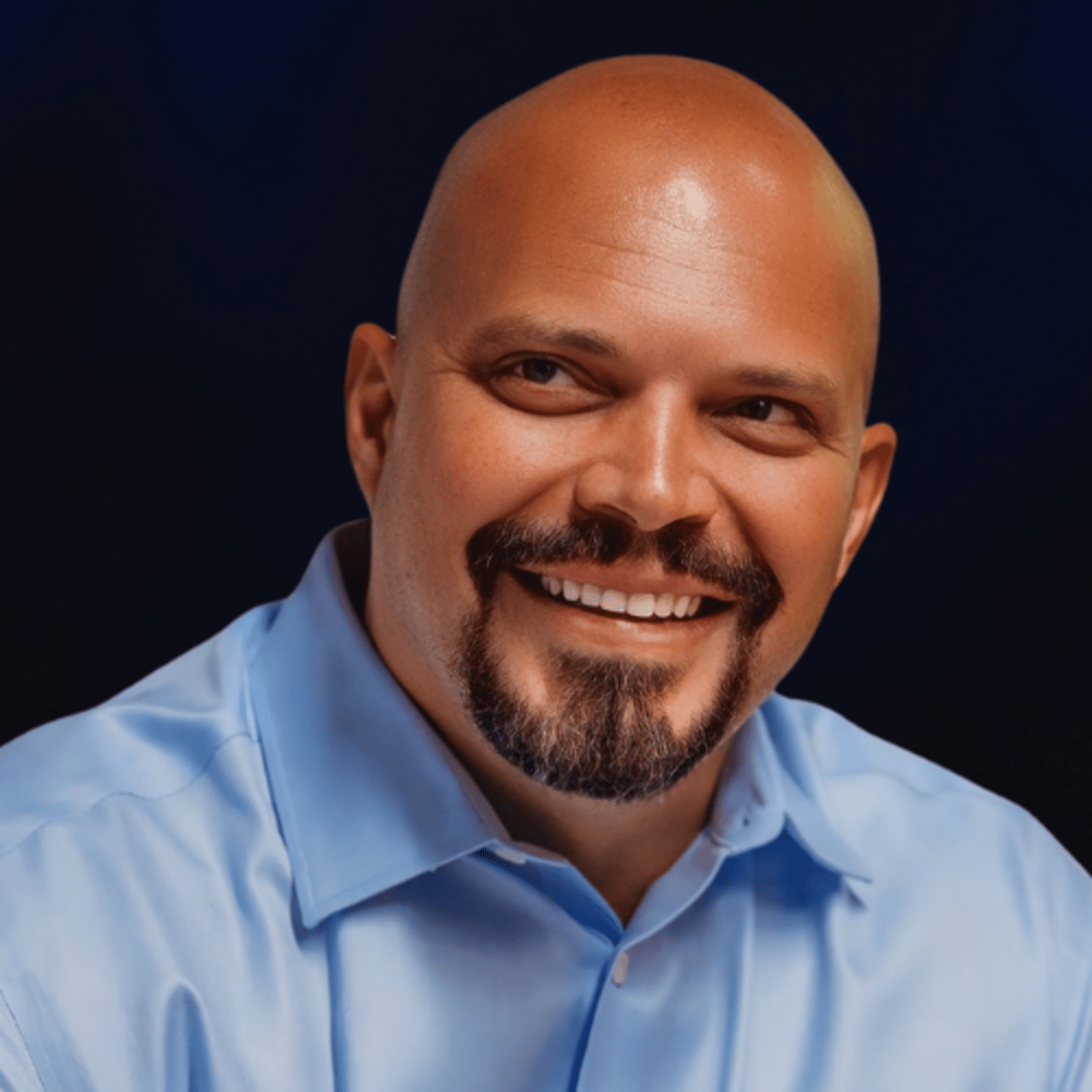


Each week, Steve is breaking down what’s happening in fintech banking with the kind of clarity you get from someone who’s lived through board debates, pricing standoffs, and product launches that either scaled or crashed. This isn’t surface-level commentary. It’s the real story behind sponsor bank partnerships, embedded finance moves, and BaaS programs that most people only hear about after they’ve already succeeded or failed.
Five Charter and Credit Enhancement Events That Repriced BaaS Partner RiskCoastal Financial disclosed on July 30 that $68.8 million in credit expense hit a single CCBX partner, including a $46.0 million write-down of a credit enhancement asset. Increase opened a bank it had been acquiring since 2025, Flex applied for a Utah industrial charter, Upstart secured OCC conditional approval, Wise saw its national trust charter denied, and X put a 6 percent deposit account in front of subscribers using Cross River. Four of those moves read as departures, the Coastal disclosure is the one that priced sponsor bank risk. The sponsor model sells two things. One is access to a charter, and the erosion of that has been the entire conversation for a year. The other is risk absorption, the promise that a bank stands behind a partner’s book of consumer credit and can collect against the indemnifications and reserves that back it. Coastal’s Q2 disclosure priced the second product, and the price came in below what the paperwork implied. That is a different kind of loss than a charter departure, and it may sit on more balance sheets than people have counted. For context on how this charter wave has been building, earlier Inside the Vault issues such as Bank Charter Confusion and Mercury Got a Charter already pointed to the migration pressure on sponsor banks. |

Advertisement Fintech NerdCon 2026 Is Hitting San DiegoFintech NerdCon lands November 19-20 at the San Diego Convention Center, and Fintech Confidential will be there recording live conversations with the people building, funding, and regulating the market. This is not the usual event floor packed with sales booths. It is built for real operator talk, what worked, what broke, what changed, and what people are doing next. |
Coastal Financial CCBX $46 Million Credit Enhancement Write-Down: What a Non-Defaulting Partner Just Cost a Sponsor BankEvery program agreement carrying a credit enhancement clause got a valuation test on July 30, and the result came in below what the contract implied. Coastal Financial reported a second-quarter net loss of $42.1 million driven by $68.8 million in credit expense tied to a single CCBX partner, including a $46.0 million valuation allowance against the credit enhancement asset. The issue is not just that one partner deteriorated. The more important point is that the partner was described as current on payments, which turns this into a reserve quality and collectability story rather than a simple default story. ▶Not every CCBX partner holds a corporate cash reserve account, so reserve design can vary materially inside the same sponsor platform. ▶The affected portfolio was about $500 million, while the rest of the core CCBX book showed improved charge-off and delinquency trends. ▶Net interest income still reached a record $89.4 million, so platform growth and reserve weakness landed in the same quarter. ▶The question to ask now: how much posted cash actually sits behind each indemnification asset on the balance sheet. |
Increase Bank Launch: Buying a Longview, Washington Charter Instead of Filing De NovoInfrastructure providers now have a live example of owning the charter outright, and it required no de novo application. Increase launched Increase Bank by completing its acquisition of Twin City Bank in Longview, Washington, then kept its infrastructure business running alongside the bank. That matters because it shows a credible path for a well-capitalized infrastructure firm to reduce dependence on sponsor banks without waiting through a full chartering cycle. ▶Acquiring an existing charter shifted the timeline from OCC de novo review to change-in-control execution. ▶Twin City keeps its community identity, preserving branch history, deposits, and exam continuity. ▶Increase says it will still work with partner banks, so this looks like dependence reduction, not immediate separation. ▶Banks serving infrastructure partners should assume acquisition is now part of the strategic menu. |
Flex Files Utah Industrial Bank Charter Application to Exit Lead Bank and Column SponsorshipConsumer credit fintechs keep showing that the sponsor model can be temporary. Flexible Finance submitted applications to charter Flex Bank as a Utah industrial bank, a move that would let it issue products directly instead of relying on current partners. This reads less like a one-off and more like a template, because the company already has operating scale, existing bank partners, and a management bench with sponsor-bank experience. ▶The proposed structure keeps Flex in the consumer credit lane, not the crypto or neobank lane people often assume first. ▶Utah remains the focal point for ILC applications from consumer finance firms seeking control without BHC Act treatment at the parent level. ▶Senior hires with sponsor-bank backgrounds may be the clearest early signal that a filing is coming. ▶For sponsor banks, the lesson is simple, partner maturity can become charter ambition fast. |

Advertisement Know Your AICharter decisions and partner agreements both come down to what an institution can document and defend, and the AI absorbing more of that documentation deserves the same rigor as the compliance function that has to defend it. |
Upstart Bank OCC Conditional Approval and Wise Trust Charter Denial: Two OCC Fintech Bank Charter RulingsThe federal charter got easier to obtain and harder to make useful in the same week. Upstart received OCC conditional approval for Upstart Bank, N.A., while Wise disclosed the OCC denial of its national trust charter application. Together, the rulings show that charter momentum depends on both supervisory record and whether the charter still solves the operating problem the applicant wants solved. ▶Conditional approval still leaves deposit insurance and holding company approvals unresolved. ▶Upstart also signed a $4 billion forward flow with Castlelake, shortening the distance between charter ambition and funding independence. ▶Wise remains active through money transmitter licenses, so the denial changed the path, not the operating business. ▶For current sponsor banks, conditional approval is often the start of runoff planning, not the end of the relationship. |
X Money on Cross River Bank: Nationwide 6 Percent APY Deposit Account Without a CharterDemand for sponsorship clearly did not disappear. Cross River said it powers X Money with FDIC-insured interest-bearing accounts, a Visa debit card, and broader payment capabilities inside X, showing a national consumer launch can still happen through a sponsor bank rather than charter ownership. This connects back to earlier coverage in Cross River Is X’s Bank, which now looks more important than when the relationship first surfaced. ▶The launch paired a headline 6 percent APY with sweep-based FDIC coverage messaging, putting disclosure quality at the center of compliance review. ▶A promotional rate above prevailing policy ranges raises the immediate question of who funds the economics. ▶Cross River concentration across large fintech names is worth naming before a supervisor names it first. ▶This is the clearest reminder in the issue that the model still attracts major consumer brands. |
Sponsor Banking’s Real Risk Is the Credit Enhancement Asset, Not the Charter DepartureFour companies moved closer to owning a charter this cycle, and those stories are easy to count because the filings are public and the dates are fixed. Coastal is the harder story, because it priced a clause every sponsor bank thought it understood and did it in a public filing while the partner was still current. The question now is not whether a bank has an indemnification clause. It is whether the reserve behind that clause is real cash, controlled, enforceable, and sized for stress rather than for comfort. That is the gap that looks likely to carry through exams, audits, and board reviews next. |

Takeaway:
An indemnification is worth only the cash sitting behind it.
If you cannot state the posted cash reserve behind your largest partner indemnification from memory, that is the number to find before Friday.

From The Source The Documents Behind This Week’s Reporting▶Coastal Financial Corporation Announces Second Quarter 2026 Results, Coastal reported a $42.1 million net loss driven by $68.8 million of credit expense tied to one CCBX partner. ▶Increase Brings Banking and Banking Infrastructure Under One Roof, Increase launched Increase Bank after acquiring Twin City Bank in Washington. ▶Flex Files Application for Utah Industrial Bank Charter, Flex laid out its Utah ILC path and management structure. ▶Upstart Receives Conditional Approval from the OCC, Upstart moved one step closer to its own bank while still needing other approvals. ▶OCC rejects Wise’s trust charter application over deficiencies, Wise’s denial showed how supervisory record can still block charter conversion. ▶Cross River powers X Money, Cross River outlined the banking, deposit, and payments infrastructure behind the launch. |
Subscribe now to get the first episodes as soon as they drop and stay ahead of the next wave of bank-fintech moves.
Listen on your favorite podcast platform: listen.frominsidethevault.com
Watch full conversations and clips: watch.frominsidethevault.com
Get email recaps and future drops: subscribe.frominsidethevault.com
