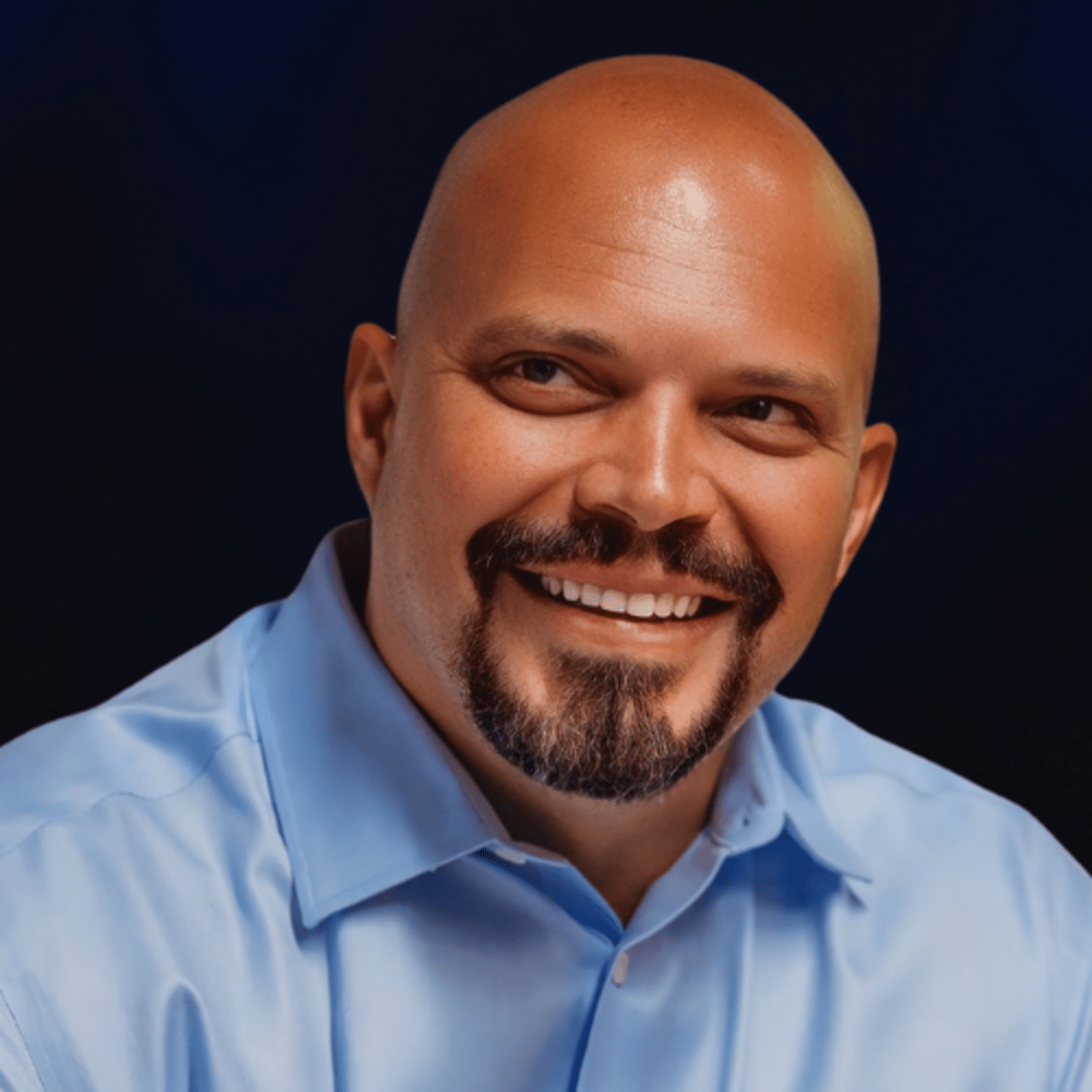


Each week, Steve is breaking down what’s happening in fintech banking with the kind of clarity you get from someone who’s lived through board debates, pricing standoffs, and product launches that either scaled or crashed. This isn’t surface-level commentary. It’s the real story behind sponsor bank partnerships, embedded finance moves, and BaaS programs that most people only hear about after they’ve already succeeded or failed.
Sponsor Banks Just Lost the Customer, the Payment, the Digital Dollar, the Crypto-and-Fintech Charter Business, and the Small Business Deposits in One Week, While the Regulators Rewrote the Scorecard They Get Graded On.
For ten years a sponsor bank could sit still and get paid. The customer used a fintech app, the fintech rented the bank's charter, and the bank held the money and took a cut for letting it happen. That deal quietly stopped working over the past seven days, and no regulator caused it. Software started opening the accounts, reading the balances, and starting the payments. The money those agents spend is settling in stablecoins that never land in a bank account. Two banks decided to issue and hold the digital dollar themselves instead of waiting to see how it played out. Two more turned consent orders into a growth strategy and came out of remediation with bigger franchises in crypto and fintech partner banking. The largest bank in the country reached past the middlemen and took the small business deposits directly. And the regulators picked the same week to rewrite the scorecard banks get graded on. The sponsor bank still owns the charter. It no longer owns the customer, the money, or the deposit. Sitting still used to be the whole business. Now it is the risk.

Advertisement
Software Took the Customer, Two Banks Issued and Custodied the Digital Dollar, Two More Turned Consent Orders Into Growth, J.P. Morgan Took the Deposits, and the FFIEC Rewrote the Exam Scorecard. The Week the Charter Stopped Being Enough.
The agent stopped helping the customer and started being the customer.
OpenAI Connected ChatGPT to More Than 12,000 Banks Through Plaid, and Catena Labs Filed for a National Trust Charter to Become the Bank for AI Agents. Banks Now Have to Decide Who Their Customer Actually Is.
Every sponsor bank now has a customer it never signed up and cannot see. On May 15, OpenAI connected ChatGPT to more than 12,000 banks through Plaid, so the customer now checks balances and asks what to do inside ChatGPT instead of a bank app. On May 18, Catena Labs filed for a national trust charter and raised $30 million to become a regulated bank for AI agents, a bank whose account holders are software. The account is opened, the balance is read, and a payment can be initiated by software the bank never reviewed. A bank should decide now what it will do the first time an agent it never met starts a payment through a fintech it backs, because when that payment goes wrong the loss does not leave with the customer. It lands on the charter holder.
The whole point of Know Your Customer is checking a person, and there is no person to check when a software agent reads the account and starts the payment. The bank that figures out how to vet an agent first gets to set the standard. The one that waits inherits whatever standard an examiner writes for it.
Nobody owns the loss on a bad agent payment yet, and the bank holds the deepest pockets in the chain. Letting a fintech partner ship agent features before the bank has a written position means the bank finds out its exposure the day a payment fails.
The bank now has to prove which person gave which agent permission, for how much, and for how long. Almost no program can produce that record today, so the gap is already open and growing with every agent that gets switched on.
OpenAI can only read accounts for now, but it has said payments and loan applications are coming. The bank should treat read-only as the warning shot, because the day the assistant can move money is the day the bank app stops being where the customer decides anything.
Catena is the part sponsor banks should not wave off. A bank built for agent accounts gives the next wave of AI fintechs somewhere to go that does not need a sponsor at all, which means the sponsor model can be skipped before it is even pitched.
One bank stopped fighting the digital dollar and started printing it.
SoFi Launched SoFiUSD, the First Stablecoin Issued by a U.S. National Bank Inside a Banking App, Opened It to 15 Million Members, and Plans to Offer It to Other Fintechs Through Galileo. A Bank Just Did the Thing Sponsor Banks Have Been Fighting.
A national bank just issued the digital dollar instead of lobbying against it. On May 27, SoFi launched SoFiUSD, the first stablecoin issued by a U.S. national bank and offered inside a banking app, on Ethereum and Solana, redeemable one for one for dollars from SoFi Bank with regular outside accounting checks. The next day SoFi said tokenized deposits are coming within weeks, so it plans to run both kinds of digital dollar at once. The legal path opened and SoFi walked through it first. It also said it will offer SoFiUSD to other fintechs through Galileo, its technology business serving about 160 million accounts. A bank should read this as the new normal and decide what it is going to issue, because a national bank just proved the digital dollar can come from the bank itself and is about to hand it to the same fintechs sponsor banks are chasing.
Whether a U.S. national bank can issue a stablecoin out in the open is now settled, in public, by a real bank. Every bank still saying it is waiting for clarity just watched its excuse expire.
Pushing SoFiUSD through Galileo means this is not a member perk, it is wholesale supply to the fintech market. A sponsor program is now bidding against a bank-issued dollar that its own partners can pick up without it.
A stablecoin issued by a chartered bank quietly answers the deposit-flight fear the trade groups keep raising. SoFiUSD stays a SoFi Bank product backed by reserves at the bank, so the deposit does not leave, it changes shape, and that is the playbook a sponsor bank can copy to keep its own money home.
Agent-driven and crypto-firm payments are already pushing onto stablecoin networks, and the dollar that fills that demand can be a bank dollar or a non-bank one. SoFi just made the first chartered-bank answer available at scale, handed it to other fintechs through Galileo, and gave every sponsor bank a working template to copy.
SoFi went from fintech, to sponsor bank partner, to charter holder, to dollar issuer. That route is now public, and a sponsor bank should assume its biggest partners are tracing it line by line.
Two banks turned consent orders into a growth strategy in the same OCC docket.

United Texas Bank Converted Its Charter to a National Bank to Custody Crypto and Settle Digital Dollars, and Axiom Bank Got Its OCC Formal Agreement Lifted After Eighteen Months of Rebuilding for Fintech Partner Banking. Two Banks Just Showed That Enforcement History Is a Starting Point, Not a Sentence.
The OCC's May docket carried a lesson sponsor banks should not miss. United Texas Bank got OCC approval to convert from a Texas state charter to a national bank, satisfied the final conditions on May 27, and became one of the first banks to complete an OCC conversion since Dodd-Frank. It picked up trust powers, direct Federal Reserve access for wire and ACH, and full FDIC insurance, while it clears about $10 billion a month for crypto firms and pitches itself as the bank for digital-asset clients Bank of America and Citi will not take. In the same release, the OCC terminated Axiom Bank's October 2024 Formal Agreement effective April 29, 2026, closing an eighteen-month BSA/AML remediation at an Orlando-based national bank that markets fintech partner banking and used the period under the agreement to rebuild its risk, governance, technology, and partner-bank operations. Both banks treated an open OCC matter as a building project, not a ceiling. A bank carrying its own enforcement letter should read these two side by side, because the OCC just published the proof that a Formal Agreement can be a runway to growth instead of a wall.
United Texas Bank turned a 2024 Federal Reserve consent order into a selling point. Axiom turned an October 2024 OCC Formal Agreement into eighteen months of risk and governance rebuilding. Two banks, two regulators, one playbook
United Texas Bank's pitch is blunt. If a digital-asset firm cannot get banked at a money-center bank, it can get full dollar access here. Every deposit a cautious sponsor bank has declined is a customer this bank is openly courting.
Trust powers, direct Fed access, and custody inside one chartered bank means digital-asset clients no longer have to split the relationship across a custodian, a trustee, and a sponsor. The bundle a sponsor bank used to be one piece of is now available from a single institution.
Axiom did not just clear the Formal Agreement. It used the period under it to hire senior leadership across commercial banking, risk, technology, finance, partner banking, and operations. The bank that comes out of remediation with that depth is a different bank than the one that went in.
Eighteen months from agreement to termination is the timeline a sponsor bank should circle. It is faster than most boards assume, and it sets a benchmark every other bank in remediation will be measured against.
The pressure is not only coming from crypto and AI, the biggest banks are coming for sponsor banks too.
Mid-size sponsor banks just lost ground to a bank big enough to cut them out completely. On May 20, J.P. Morgan deepened its work with BILL, adding real-time sub-accounts and credit directly inside BILL so small and mid-size businesses move money across wire, ACH, and instant payment networks in seconds. The advantage is size. J.P. Morgan can take these business customers onto its own books and keep the full margin instead of splitting it with a middleman and a sponsor. A bank should run the numbers now on what it offers that a giant bank with its own real-time sub-account tools does not, because the honest list is getting short.
A bank big enough to do this directly skips the whole middleman setup, so the margin that used to be split three ways goes to one bank. No mid-size sponsor can win that fight on price, so it has to win on something else or not bid.
Posting dropped from days to seconds inside BILL, which hands fintech partners a public number for what real time means. A sponsor bank still running overnight batches will hear that number quoted back to it at the next renewal.
The sub-account tool is the product here, not a feature stapled to a checking account. A bank that still treats sub-accounts as an add-on is selling against a competitor that built them as the main event.
Small business deposits are the cheapest, stickiest money in the book. Watching J.P. Morgan take them directly is the cue to move deposit pricing and concentration onto the next board agenda, not a later one.
What is left to sell is compliance, program management, and risk sharing, because basic money movement is turning into something a fintech can buy straight from the biggest banks. A sponsor bank that cannot name its edge beyond moving money does not have one anymore.
While the market took the customer, the regulators rewrote the scorecard.
The FFIEC Proposed Rebuilding the CAMELS Rating System Around "Material Financial Risk" and Cut "Willingness to Serve the Legitimate Banking Needs of the Community" From the Management Component. Sponsor Banks Just Got a New Scorecard, and a Few of the Lines They Have Been Graded On Are Disappearing.
The examiner scorecard every sponsor bank lives under is being rebuilt, and the rewrite changes what an exam can downgrade a bank for. On May 19, the FFIEC proposed revisions to the CAMELS rating system that retain the basic framework but shift the emphasis to material financial risk, with comments due August 17. The Management component is the headline change. The proposal removes evaluation factors tied to "management depth and succession," "responsiveness to recommendations from auditors and supervisory authorities," and "willingness to serve the legitimate banking needs of the community," and ties Management ratings of 3 or worse to a material financial risk threshold rather than the broader risk-management language used today. A bank running a sponsor program should read the proposal in detail before the comment window closes, because two of the soft lines examiners have been quoting in BaaS exam findings for the past three years are being deleted from the rulebook, and the lines that replace them put more weight on actual losses than on program structure alone.
"Willingness to serve the legitimate banking needs of the community" was the catch-all phrase examiners leaned on to push banks toward fair-lending and reputational expectations. Cutting it from the Management factors does not delete the policy, but it removes the rating hook, which changes how examiners can justify a downgrade.
"Responsiveness to recommendations from auditors and supervisory authorities" being removed is the bigger quiet shift. Several BaaS-era enforcement actions cited slow responsiveness to examiner concerns as a Management rating issue. The proposal moves that off the scorecard and into the narrative.
Tying a Management 3 or worse to a material financial risk threshold is the part to underline. A bank with strong financials and weak program controls would, under the proposal, be harder to downgrade on Management alone than it is today.
Composite ratings get clarified too. Under the proposal, risk management weaknesses that do not produce observable deterioration of financial condition would not alone support a 4 or 5 composite rating. That is a direct narrowing of examiner discretion, and sponsor banks with strong balance sheets and messy programs are the institutions most affected by it.
The comment window is open until August 17. A bank that wants to shape what replaces the deleted language has roughly ten weeks to file, and the trade groups will be writing too. Silence is a choice.
The scorecard rewrite is happening at the same time the market is taking the customer, the payment, the digital dollar, and the deposit. A bank that focuses only on the regulatory change and ignores the market loss will pass an exam and lose a business. A bank that does the opposite will keep the business and fail an exam. The point is to read both.
The Charter Got Repriced and the Scorecard Got Rewritten in the Same Seven Days. The Banks That Do Not Pick Something to Own Will Spend the Year Explaining the Gap.
The past seven days turned software into the customer, stablecoins into the payment, and two banks into digital-dollar issuers. OpenAI made ChatGPT the place people check their money across twelve thousand banks, and Catena filed to make AI agents the customer of record. SoFi and United Texas Bank answered from the other direction, one printing the digital dollar and the other converting its charter to hold and settle it, while Axiom closed out an eighteen-month OCC matter and came out a bigger fintech partner bank. J.P. Morgan reached past the middlemen for the small business deposits, and the FFIEC rewrote the rating system every sponsor bank gets graded on. The cause is that the customer, the payment, the deposit, and even the scorecard are all moving at once, and the effect is that holding a charter and waiting is no longer a business model. The banks that win the next year are the ones that pick something real to own, whether that is the balance sheet, the issued dollar, the program, or the customer, and the ones that pick nothing will spend the year explaining to an examiner why the volume left.

Takeaway:
A sponsor bank that does not pick a layer to own this quarter will spend the rest of the year explaining where the volume went.
From The Source
For those of you wanting a more in-depth look at the articles (and the links to them…)
OpenAI launched a personal finance experience for ChatGPT Pro users in the U.S. on May 15, 2026, working with Plaid to let users connect accounts across more than 12,000 financial institutions and see a dashboard of spending, portfolio performance, subscriptions, and upcoming payments, with the tool currently able to read balances, transactions, investments, and liabilities but not make changes, and OpenAI signaling future additions including partner-driven loan applications.
Catena Labs, the AI-native financial institution founded by Circle co-founder Sean Neville, applied for a national trust bank charter with the OCC on May 18, 2026 and announced a $30 million Series A co-led by a16z crypto and Acrew Capital, seeking to become a regulated provider for AI agents that supplies verified identities, accounts, dollar balances, custody, and programmatic payment access in line with the GENIUS Act, while keeping human operators in control through spending limits and audit trails.
SoFi Technologies announced on May 27, 2026 that SoFiUSD, a bank-issued U.S. dollar stablecoin, is available for SoFi members to buy, sell, hold, and convert directly within the SoFi app, marking the first time a stablecoin issued by a U.S. national bank is available on a consumer banking app, with the token running on Ethereum and Solana, redeemable one for one for U.S. dollars from SoFi Bank, N.A. backed by liquid assets and regular CPA attestations, available to SoFi's nearly 15 million members and with planned distribution to other fintechs through Galileo's technology business of roughly 160 million accounts, and with SoFi confirming on May 28 that it plans to launch tokenized deposits in the coming weeks.
United Texas Bank, a Dallas-based institution that clears roughly $10 billion a month in dollar volume for crypto firms, completed its conversion from a Texas state charter to a national bank charter approved by the OCC, satisfying the final conditions on May 27, 2026 and becoming one of the first banks to complete an OCC conversion since the Dodd-Frank Act, gaining full trust powers, direct Federal Reserve access for wire and ACH, FDIC insurance, and the ability to provide digital asset custody and stablecoin settlement, while positioning itself as a banking bridge for crypto firms that cannot get accounts at money-center banks and converting its 2024 Federal Reserve consent order into a proprietary compliance offering.
J.P. Morgan deepened its embedded finance work with BILL on May 20, 2026, pairing its Wallet API real-time virtual sub-accounts with BILL to give small and mid-size businesses instant access to credit and funds across wire, ACH, and instant payment networks, cutting payment posting from days to seconds and letting the bank take small business money directly onto its own books with no banking-as-a-service middleman.
The Federal Financial Institutions Examination Council released a proposal on May 19, 2026 to revise the Uniform Financial Institutions Rating System, commonly known as CAMELS, retaining the basic framework while modifying composite and component rating definitions to emphasize material financial risk, removing evaluation factors tied to management depth and succession, responsiveness to auditors and supervisors, and willingness to serve the legitimate banking needs of the community from the Management component, tying Management ratings of 3 or worse to a material financial risk threshold, and clarifying that risk management weaknesses without observable deterioration of financial condition would not alone support a composite 4 or 5 rating, with comments due by August 17, 2026.
Axiom Bank, an Orlando, Florida nationally chartered bank that offers personal banking, commercial lending, treasury management, merchant services, specialized financing, and fintech partner banking, announced on May 26, 2026 that the Office of the Comptroller of the Currency terminated its Formal Agreement dated October 3, 2024 effective April 29, 2026, closing an eighteen-month remediation that included a rebuilt risk management architecture, new senior executives across commercial banking, risk, technology, finance, partner banking, and operations, significant investment in compliance infrastructure and enterprise risk management, and a governance framework designed to support scalable, sustainable growth, with President and CEO Ross Breunig saying the bank used the process to build a fundamentally stronger institution rather than simply satisfy a regulatory requirement.
Subscribe now to get the first episodes as soon as they drop and stay ahead of the next wave of bank-fintech moves.
Listen on your favorite podcast platform: listen.frominsidethevault.com
Watch full conversations and clips: watch.frominsidethevault.com
Get email recaps and future drops: subscribe.frominsidethevault.com
