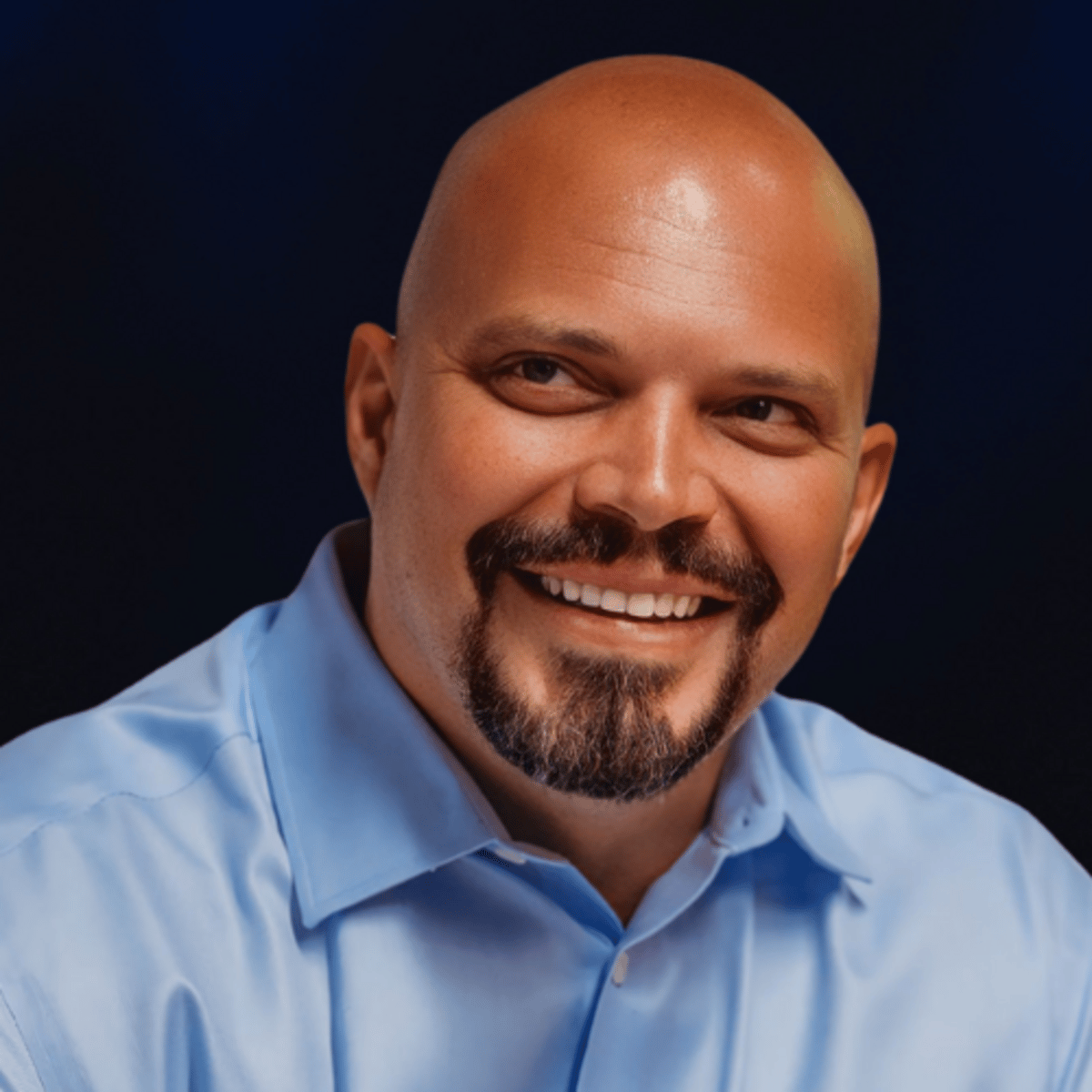


Each week, Steve is breaking down what’s happening in fintech banking with the kind of clarity you get from someone who’s lived through board debates, pricing standoffs, and product launches that either scaled or crashed. This isn’t surface-level commentary. It’s the real story behind sponsor bank partnerships, embedded finance moves, and BaaS programs that most people only hear about after they’ve already succeeded or failed.
Sponsor banks are being bought for their branches, fintechs are buying charters and licenses, and the OCC is pricing the door. Lincoln Savings Bank has run a sponsor program since 2014, and its own support pages name Cash App, Acorns, Qapital, and M1 as partners. Equity Bancshares agreed to buy the bank on September 3 for $123.8 million. The release and the trade coverage mention 16 Iowa branches, a retained management team, and earnings accretion. None of them mention the fintech book. When a sponsor bank sells and the buyer talks about branches, the partner program didn’t set the price. FNBO’s proposed InBank acquisition adds another buyer talking about geographic expansion, while TabaPay is seeking a national bank charter and assuring its existing banks that the new institution will “complement” them. OpenPayd has added 43 state money transmitter licenses, Revolut has conditional OCC approval with four activities requiring further permission, and United Texas has a terminated Fed order plus an OCC order that remains in force. Each development changes what a bank can provide, what a partner still needs, or who decides whether the relationship continues. Any revenue forecast supported by “they love working with us” is due for another review.
|

Advertisement Fintech NerdCon 2026 Is Hitting San DiegoFintech NerdCon lands November 19-20 at the San Diego Convention Center, and Fintech Confidential will be there recording live conversations with the people building, funding, and regulating the market. This is not the usual event floor packed with sales booths. It is built for real operator talk, what worked, what broke, what changed, and what people are doing next. |
Equity’s Acquisition, TabaPay’s Bank Plan, and the OCC’s Conditions Put Partner Revenue Under Review
|
Sixteen branches got an explanation. The fintech business can apparently call later. Fintechs using Lincoln Savings Bank need a program-specific answer about continuity. Equity Bancshares agreed September 3 to acquire Lincoln Bancorp, whose bank holds $1.7 billion in assets and $1.5 billion in deposits across 16 Iowa branches. The announcement explains the community banking rationale without setting out a plan for LSBX. That leaves existing partners with contract questions to resolve before the expected fourth-quarter close. ▶The proposed consideration is 77.5 percent stock and 22.5 percent cash. Partner continuity deserves similarly specific terms. ▶Keeping branches and management does not establish whether every fintech program fits the buyer’s risk appetite. ▶Public silence leaves the program’s future unanswered. It does not establish its value or prove an exit is planned. ▶FNBO separately agreed September 2 to acquire InBank for $200 million to $204 million, adding 13 branches across Colorado and New Mexico. Its announcement also emphasizes geographic expansion. ▶InBank’s customer conversion is expected in the second half of 2027. Deal approval, closing, and systems conversion require separate planning. For sponsor banks: Make program economics, obligations, and unresolved findings clear to an acquirer. For fintechs: Request a written position on your program, including consent requirements, termination rights, and conversion plans. For compliance teams: Reconcile the active partner inventory against contracts and customer disclosures before anyone promises continuity.
|
The client would like to thank its banks. It is also buying one. TabaPay’s existing banks face a customer preparing to provide more banking services itself. The company announced September 2 that it intends to acquire Denver-based Transact Bank and rename it TabaBank. Federal Reserve and OCC approval remain required, with operations targeted for 2027. TabaPay says the bank will “complement” its partner network. It also says ownership gives it greater control over service delivery. Both statements deserve attention. ▶The $155 million financing is described as growth capital led by FTV Capital. It is not a disclosed purchase price for the bank. ▶TabaPay is on track to process more than $100 billion in annual payment volume through approximately 20 partner banks, including Pathward and Evolve. Exposure depends on each bank’s actual share and services. ▶TabaPay says current operations with its partners are unchanged. Its announcement does not promise each bank the same future volume or revenue. ▶Any migration depends on approvals, operating readiness, and contractual obligations. Model those dependencies before assigning a departure date. For sponsor banks: Ask which activities TabaBank intends to bring in-house, then calculate the associated fee exposure. For fintechs: Get specific about what the new bank will provide and which services still depend on outside institutions. For compliance teams: Add the acquisition and proposed operating model to ongoing partner monitoring.
|
Forty-three licenses. Banking relationships still required. OpenPayd’s U.S. expansion gives banks a more specifically licensed counterparty to serve. Its September 2 announcement brings MSB USA and 43 state money transmitter licenses into the group following regulatory approvals. Full integration remains ahead. The release also explicitly states that MSB USA does not accept deposits, issue bank accounts, or provide banking services. A useful paragraph for anyone already announcing the end of banks. ▶The licenses expand money transmission authority across covered jurisdictions. They do not confer bank status. ▶MSB USA describes services delivered through third-party financial institutions and payment providers. Those relationships remain part of the operating model. ▶Banks assessing the opportunity need to identify the settlement, account, and funds-handling services being requested. ▶State coverage and permitted activities require individual review; 43 licenses do not establish identical permissions everywhere. ▶MSB USA will retain its leadership and established services while preparing for full integration. Operational continuity and integration readiness need separate review. For sponsor banks: Explain the value of the services the licensed business still needs to buy. For fintechs: Identify which dependencies the acquisition removes and which banking agreements remain necessary. For compliance teams: Review license conditions, examination history, customer exposure, and sanctions controls alongside the proposed account structure.
|

Congratulations on the approval. Several products still need approval. Revolut’s banking partners have a clearer basis for migration planning. The OCC’s September 2 preliminary conditional approval requires further supervisory non-objection for retail foreign exchange, foreign exchange forwards, merchant acquiring, and correspondent banking for unaffiliated foreign banks. Final opening authorization remains outstanding. Partners need to assess the services Revolut can eventually move and the permissions required to move them. ▶Revolut must provide at least $95 million in initial paid-in capital, net of organizational and preopening expenses. ▶A minimum 10 percent tier 1 leverage ratio applies for the first three years. ▶The letter sets a 12-month capital deadline and an 18-month opening deadline. These are conditions of approval, not scheduled customer transfers. ▶OpenReserve separately announced preliminary conditional OCC approval, including a 12 percent leverage requirement and an independent security review. It also needs further approvals before opening. ▶Neither decision guarantees continued business for an existing sponsor. Unfinished permissions create dependencies whose duration still needs to be established. For sponsor banks: Match the conditions to services you currently provide and request a migration plan for each. For fintechs: Build the launch schedule around outstanding permissions and operating readiness. For compliance teams: Track capital, product permissions, deposit insurance, and holding-company approvals separately.
|
The Fed order ended. The OCC would still like a word. United Texas Bank remains subject to enforcement despite the Federal Reserve’s September 4 termination announcement. The Fed ended its August 2024 cease-and-desist order effective September 2. The bank converted to a national charter in June, and the OCC made a new BSA/AML consent order a condition of approving that conversion. Anyone updating the bank’s status to “clear” has another document to read. ▶The OCC action addresses BSA/AML compliance, the same subject as the terminated Fed order. ▶The Fed termination closes that agency’s action. The remaining OCC requirements still affect the bank’s obligations. ▶The same Fed release terminates a July 5, 2023 written agreement with Quontic Bank Acquisition Corp. and Quontic Bank Holdings Corp., also effective September 2. ▶Quontic’s holding-company action and United Texas’s bank-level action involve different entities and supervisory histories. They offer no reliable universal remediation timetable. ▶A change in regulator requires a fresh review of applicable restrictions before anyone revises growth plans or partner commitments. For sponsor banks: Describe enforcement status by agency, legal entity, and outstanding requirement. For fintechs: Confirm the activities your bank can support before treating a termination announcement as permission to expand. For compliance teams: Keep the terminated action, successor order, and charter conversion documented separately.
|
Strategic Partner Needs a Revenue Explanation The sponsor relationship gets harder to defend when a customer can own more of the services it previously bought. Equity’s announcement leaves Lincoln’s fintech partners awaiting an explanation, while TabaPay and OpenPayd describe how their own capabilities are expanding. Revolut’s conditions and United Texas’s remaining order show how much still depends on specific regulatory permissions and obligations. Calling every counterparty a strategic partner has become remarkably convenient for people who would prefer not to discuss which revenue could disappear. Put the retained services, contractual commitments, and unresolved dependencies in front of the board, with numbers attached. |

Takeaway:
A partner’s continuing need for a bank does not guarantee its continuing need for your bank.

From The Source For those of you wanting a more in-depth look at the articles (and the links to them...) ▶Equity Bancshares, Inc. and Lincoln Bancorp Announce Plans to Merge | September 3, 2026 Equity Bancshares agreed to acquire Lincoln Bancorp, parent of Reinbeck, Iowa-based Lincoln Savings Bank, for $123.8 million in a 77.5 percent stock and 22.5 percent cash deal. Lincoln Savings Bank brings $1.7 billion in assets, $1.5 billion in deposits, $1.2 billion in loans, and 16 Iowa branches. The deal is expected to close in the fourth quarter of 2026 and lift Equity to roughly $9.1 billion in combined assets, with projected earnings accretion of 5.1 percent in 2027 and 7.5 percent in 2028. ▶Kansas community bank says merger will enable big Iowa push | September 3, 2026 American Banker’s coverage of the Equity and Lincoln deal focuses on Equity’s plan to keep all 16 Iowa branches and much of Lincoln’s management team, positioning the $7.7 billion Kansas bank for a larger Iowa footprint. The piece frames the acquisition as market expansion and community banking continuity, with no discussion of Lincoln Savings Bank’s fintech partner program. ▶FNBO to Acquire InBank, Expand Colorado Market | September 2, 2026 First National Bank of Omaha agreed to acquire Denver-based InBank for $200 million to $204 million, or $16.41 to $16.74 per share. InBank holds $1.4 billion in assets with nine branches along Colorado’s Front Range and four in northern New Mexico. Regulatory approval is expected by the end of 2026, with customer conversion in the second half of 2027. The combination gives FNBO, a $35 billion bank including affiliates, 30 branches across Colorado. ▶TabaPay Closes $155 Million Strategic Growth Financing Led by FTV Capital and Announces Planned Acquisition of Transact Bank | September 2, 2026 TabaPay closed a $155 million strategic growth financing led by FTV Capital and announced plans to acquire Transact Bank N.A., an OCC-chartered national bank in Denver, Colorado. The bank will be renamed TabaBank N.A. and is expected to receive Federal Reserve and OCC approval in 2026 and begin operating in 2027. TabaPay says TabaBank will complement its existing partner bank network, adding redundancy and in-house capability for complex payment and money movement use cases. ▶TabaPay is seeking to buy a community bank for its charter | September 3, 2026 American Banker reports that TabaPay, on pace to process more than $100 billion in payment volume this year through roughly 20 partner banks including Pathward and Evolve Bank and Trust, is buying $6.4 million-asset Transact Bank to bring payments and banking infrastructure under one roof. The deal joins a short list of fintech bank purchases that includes LendingClub’s acquisition of Radius Bank, SoFi’s purchase of Golden Pacific Bank, and Jiko’s acquisition of Mid-Central Savings Bank. ▶OpenPayd Strengthens Position in the U.S. Market Through the Acquisition of 43 State Licences | September 2, 2026 OpenPayd finalized its acquisition of MSB USA Inc., a state-licensed money services business, bringing 43 state money transmitter licenses into the group following regulatory approvals, with full platform integration still ahead. The London-based embedded finance platform offers accounts, foreign exchange, domestic and cross-border payments, and open banking through one API to more than 1,200 business clients including Kraken, eToro, and OKX. As of July 31, 2026, OpenPayd reported annual recurring revenue above $96 million and annualized transaction volume above $300 billion. The company expects to list on Nasdaq under the ticker OP in the fourth quarter of 2026 through a business combination with Titan Acquisition Corp. at a pro forma equity valuation of up to $1.145 billion. ▶OCC Corporate Decision #1390: Revolut Bank US, National Association | September 2, 2026 The OCC granted preliminary conditional approval for Revolut to charter Revolut Bank US, National Association, requiring at least $95 million in initial paid-in capital and a tier 1 leverage ratio of no less than 10 percent for the first three years. Retail foreign exchange, foreign exchange forwards, merchant acquiring, and correspondent banking for non-affiliated foreign banks each require separate OCC non-objection before launch. Capital must be raised within 12 months and the bank must open within 18 months. FDIC deposit insurance and Federal Reserve holding company approvals remain pending. ▶Revolut wins US charter with limits on four products | September 3, 2026 American Banker reports that Revolut’s conditional OCC approval is the first recent charter decision to gate individual products behind separate supervisory sign-off, a structure FS Vector’s Evey Guo called new for the agency. Revolut serves about 1 million U.S. customers through sponsor banks including Lead Bank and plans to migrate them to its own charter after opening, expected in 2027. Revolut is the third de novo fintech charter approved in 2026, following Nubank in January and OpenReserve the same day. ▶OCC Grants OpenReserve Preliminary Conditional Approval to Charter a National Bank | September 3, 2026 OpenReserve Holdings, founded by former MoneyLion executives Dee Choubey and Richard Correia and backed by Andreessen Horowitz, Coinbase Ventures, and Jump Capital, received preliminary conditional OCC approval to charter OpenReserve Bank, N.A. in Salt Lake City. The bank plans commercial and retail lending, treasury management, traditional and tokenized deposits, and continuous settlement. Conditions include a 12 percent tier 1 leverage ratio for three years, an independent security review of its banking platform, and FDIC and Federal Reserve approval before opening. ▶Brazil’s Itaú gets conditional OCC nod for U.S. bank charter | August 24, 2026
Banking Dive reports the OCC gave Itaú Unibanco, Latin America’s largest bank at $633.7 billion in assets, preliminary conditional approval dated August 14 for Itaú Bank, National Association, a single-office national bank in Miami. The bank will serve high- and ultra-high-net-worth clients with Latin American ties, offering deposits, mortgages, credit cards, and fiduciary services. Conditions include at least $507 million in opening capital and an 8 percent tier 1 leverage ratio for three years, with Federal Reserve and FDIC approval still required. |
Subscribe now to get the first episodes as soon as they drop and stay ahead of the next wave of bank-fintech moves.
Listen on your favorite podcast platform: listen.frominsidethevault.com
Watch full conversations and clips: watch.frominsidethevault.com
Get email recaps and future drops: subscribe.frominsidethevault.com
